Promotional Grocery Bags: The Complete Guide for Australian Businesses
Discover how promotional grocery bags can boost brand visibility, support sustainability goals, and deliver real ROI for Australian businesses.
Written by
Blake Morrison
Bags & Totes
Every time someone carries your branded bag through a supermarket, farmers market, or shopping strip, your logo is doing the work for you. Promotional grocery bags are one of the most practical, high-visibility branded merchandise options available to Australian businesses — and in 2026, with consumer awareness around sustainability at an all-time high, they’re more relevant than ever. Whether you’re a Sydney retailer looking to reward loyal customers, a Brisbane food brand launching a new product range, or a Melbourne council promoting its green initiatives, a well-designed promotional grocery bag delivers genuine everyday value. This guide breaks down everything you need to know to plan, order, and maximise your investment in custom branded grocery bags.
Why Promotional Grocery Bags Are a Smart Branding Investment
Few promotional products match the sheer usefulness of a grocery bag. Unlike a branded pen that gets lost in a drawer or a keyring that rarely sees the light of day, a reusable grocery bag is used repeatedly — in supermarkets, at markets, at the gym, or on a beach trip. That kind of repeat exposure translates directly into brand impressions, and lots of them.
Research consistently shows that promotional bags generate more impressions per item than almost any other category of branded merchandise. When you consider that a single bag might be used several times per week over many months, the cost-per-impression for a quality promotional grocery bag is remarkably low. For businesses working within tight marketing budgets, that’s a compelling argument.
The Sustainability Advantage
In Australia, the shift away from single-use plastics has changed consumer behaviour in meaningful ways. Most states and territories have banned lightweight single-use plastic bags, which means reusable bags have become a genuinely daily essential. A branded grocery bag isn’t just a nice-to-have — it’s something recipients will actually use because they need it.
This positions promotional grocery bags as a natural fit for organisations with sustainability commitments. Our broader guide to sustainable promotional items covers the full landscape of eco-friendly merch, and grocery bags fit squarely within that conversation. If your brand is trying to demonstrate environmental responsibility, handing out a well-made reusable bag sends exactly the right message. You might also want to explore upcycled promotional products in Australia as a complementary approach.
Choosing the Right Material for Your Promotional Grocery Bags
Not all grocery bags are created equal. The material you choose will affect the look, feel, durability, and environmental credentials of your finished product — as well as your budget.
Non-Woven Polypropylene (PP)
This is the most widely used material for promotional grocery bags in Australia. Non-woven PP bags are lightweight, affordable, and available in a wide range of colours. They’re strong enough for a full grocery shop and accept screen printing and heat transfer decoration cleanly. Minimum order quantities (MOQs) for non-woven PP bags typically start from around 100–200 units, making them accessible for smaller campaigns.
The trade-off is that non-woven PP is a plastic-derived material. It’s recyclable in theory, but not through standard kerbside recycling. If environmental credentials are a priority, other materials may serve you better.
Cotton Canvas and Calico
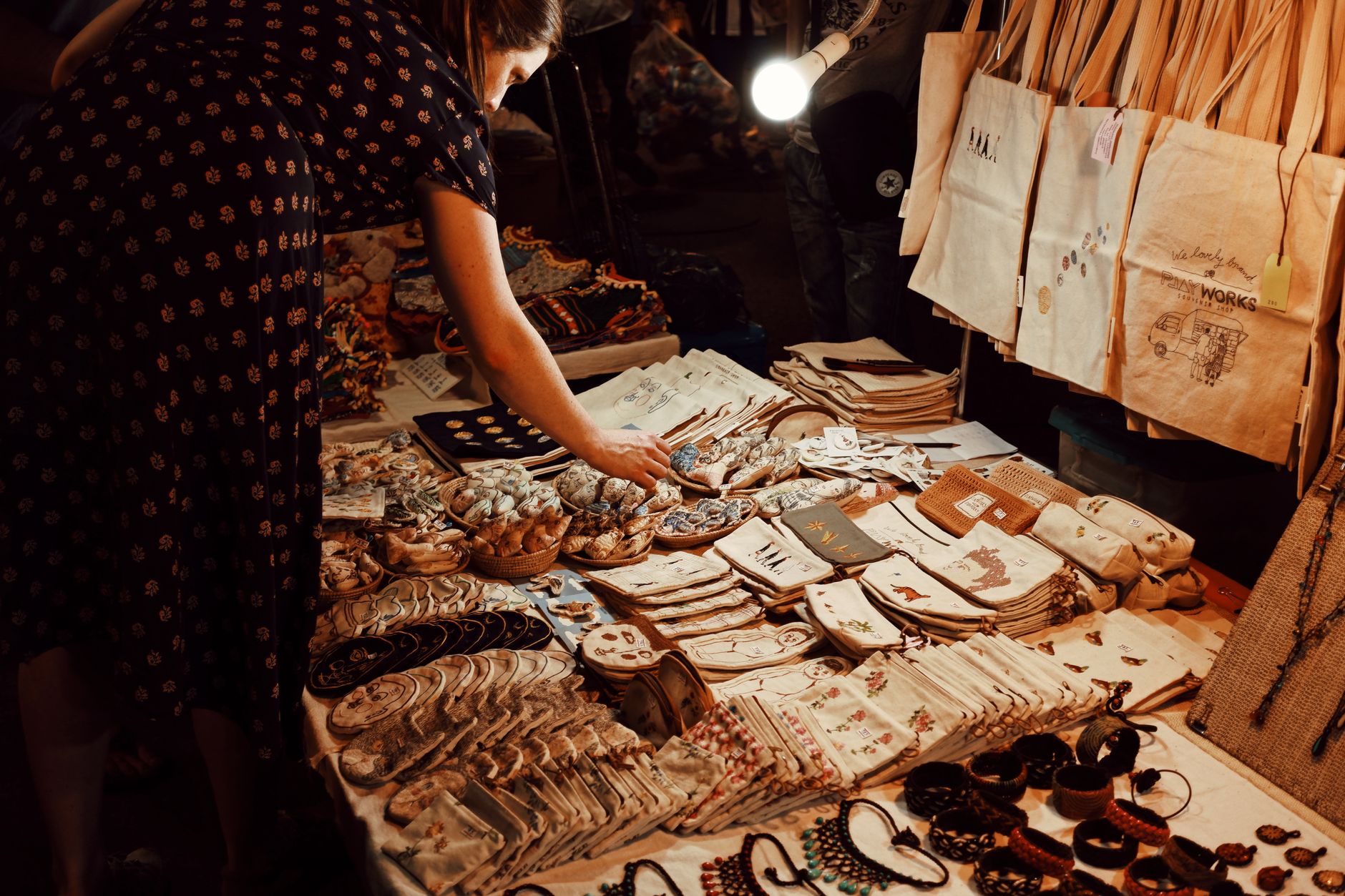
Cotton canvas bags have a premium, natural look that appeals to lifestyle brands, boutique retailers, and health food businesses. They’re durable, washable, and genuinely biodegradable. Screen printing on cotton canvas produces vivid results, and the natural fabric texture gives branded artwork a premium feel.
For deeper detail on personalised options in this category, our guide to reusable shopping bags personalised is worth reading before you brief your supplier. Cotton bags generally come at a higher price point than non-woven PP but often justify the cost through perceived quality.
Recycled PET (rPET) and Recycled Materials
Bags made from recycled PET bottles or other post-consumer materials are growing in popularity, particularly among corporate clients in Perth, Adelaide, and Melbourne who want to demonstrate genuine sustainability credentials. rPET bags have a slightly more technical, functional look and are popular for corporate gifting programs and conference merchandise. They’re also a natural companion to other eco-focused items like our reusable water bottles range.
Jute and Hessian
Jute bags offer a rustic, natural aesthetic that works particularly well for farmers markets, organic food brands, and artisan producers. They’re robust and biodegradable, though they can be heavier and more expensive to produce in bulk.
Decoration Methods: What Works Best on Grocery Bags
Getting your branding to look sharp on a grocery bag depends on choosing the right decoration method for your chosen material and artwork.
Screen Printing
Screen printing is the go-to method for most promotional grocery bags, particularly on non-woven PP and cotton canvas. It produces clean, vibrant results with strong colour saturation. Most suppliers can match Pantone (PMS) colours accurately, which is important for brands with strict colour guidelines. Screen printing is cost-effective at volume — the more you order, the lower the per-unit cost.
Sublimation
Sublimation allows for full-colour, edge-to-edge printing and is ideal if your design includes gradients, photography, or complex artwork. It works best on polyester-based materials. If you’re considering sublimation for a bag project, our guide to sublimation for promotional products covers the technique in detail and is a useful starting point.
Heat Transfer and Digital Printing
For smaller runs or designs with many colours, digital printing and heat transfer are practical options. They’re especially useful when you need a short-run order quickly — say, for a Gold Coast pop-up event or a trade show booth that needs branded bags in a hurry.
Sizing and Style Considerations
Promotional grocery bags come in a range of sizes and styles, and getting this right matters for usability.
Standard Tote Styles
The classic flat-bottom tote is the workhorse of the promotional bag world. It’s simple to produce, easy to pack flat for distribution, and versatile enough to be used for groceries, gym gear, or a day at the beach. If you want something with a bit more functionality, tote bags with zippers offer added security and a more polished aesthetic.
Gusseted and Structured Bags
A bag with a gusset — an expanded base or sides — can carry significantly more volume and stands upright when packed. For food businesses or supermarket promotions, a gusseted bag is noticeably more practical. This style is often paired with reinforced handles for heavier loads.
Cooler Bag Styles
For food and beverage brands, a branded insulated cooler bag is a step up in perceived value. These are excellent for product launches, hampers, and premium gifting. If this appeals to you, our breakdown of the small cool bag options available in Australia is a helpful companion read.
Budgeting and Ordering Tips
Planning your budget before you approach a supplier will save time and set realistic expectations. Here are some practical guidelines for 2026.
Typical price ranges:
- Non-woven PP tote bags: $1.50–$4.00 per unit (depending on size and quantity)
- Cotton canvas or calico bags: $3.50–$8.00 per unit
- rPET or eco-material bags: $4.00–$10.00 per unit
- Insulated cooler grocery bags: $6.00–$15.00 per unit
Setup fees for screen printing typically range from $40–$80 per colour per screen, so simpler designs with fewer colours are more cost-effective at lower quantities.
Ordering timeline: Allow at least 2–3 weeks for standard orders. If you need bags for a specific event in Darwin or Canberra, build in buffer time and confirm turnaround expectations upfront. Rush orders are possible but often incur additional fees.
Artwork requirements: Prepare your logo in vector format (AI or EPS) for the cleanest print results. Your supplier will provide a digital proof before production, and approving this promptly keeps your project on schedule.
Pairing Promotional Grocery Bags with Other Branded Products
A promotional grocery bag becomes even more powerful when it’s part of a coordinated merchandise bundle. Consider pairing bags with:
- Branded reusable drink bottles — our guide to popular water bottles covers the best options for bundle gifting
- Custom keep cups — check out our travel mug coffee recommendations for corporate gifting
- Promotional USB drives — a promotional USB stick tucked inside a branded bag makes for a memorable conference gift
- Branded stationery — notebooks and pens complement a grocery bag in a welcome pack
Bundles are particularly effective for conference kits, new customer welcome packs, and staff onboarding gifts. If you’re after broader inspiration, our roundup of unique promotional products is worth a browse for ideas that complement a bag-centred campaign.
Industries That Benefit Most from Promotional Grocery Bags
Almost any organisation can benefit from branded grocery bags, but some sectors see particularly strong returns:
- Retail and FMCG brands: Point-of-sale giveaways and customer loyalty rewards
- Real estate agencies: Settlement gifts and open home giveaways
- Supermarkets and food producers: Brand extension and sustainability messaging
- Councils and government bodies: Community events and sustainability programs
- Schools and universities: Fundraising, orientation packs, and sporting events
- Health and wellness organisations: A natural fit alongside branded gym towels or wellness kits
Conclusion: Key Takeaways for Ordering Promotional Grocery Bags
Promotional grocery bags are a versatile, high-impact, and genuinely useful branded merchandise choice for Australian businesses in 2026. Done well, they deliver lasting brand visibility at a competitive cost per impression. Here’s a summary of the key points to carry forward:
- Choose your material based on your values and audience — cotton canvas and rPET offer stronger sustainability credentials than standard non-woven PP
- Match your decoration method to your design — screen printing suits bold, simple logos while sublimation suits complex, full-colour artwork
- Order realistic quantities — MOQs are often lower than people expect, starting from as few as 100 units for many styles
- Plan your timeline carefully — build in at least 2–3 weeks and confirm turnaround times before committing to a delivery date
- Think in bundles — pairing a branded grocery bag with a reusable bottle, keep cup, or notebook creates a more memorable gifting moment
- Prepare vector artwork — clean, properly formatted files make for faster approvals and sharper print results
Whether you’re running a community event in Hobart, launching a new product in Adelaide, or building a corporate gifting program in Sydney, a well-executed promotional grocery bag is one of the smartest investments your brand can make in everyday visibility.